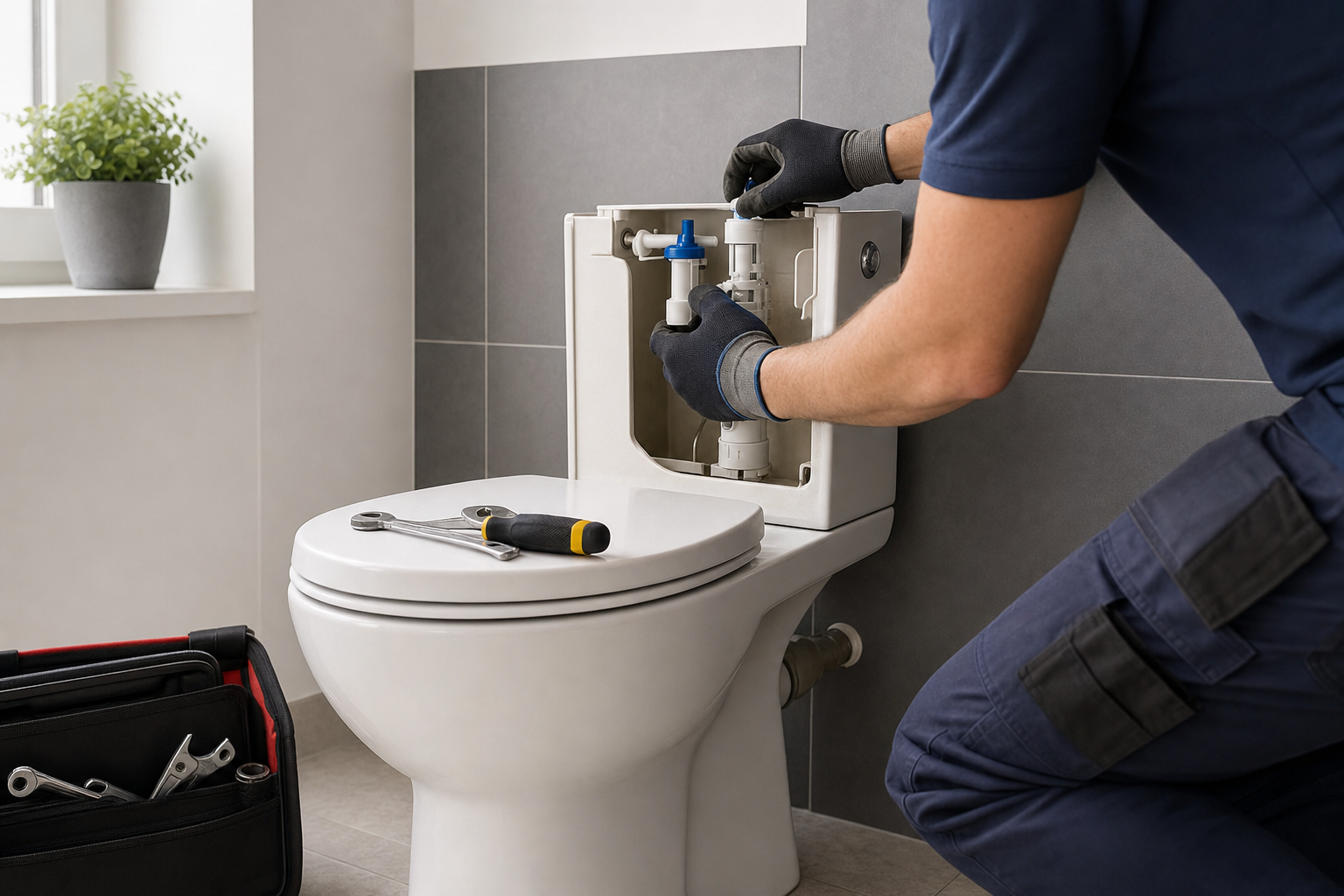
If you need toilet plumbing in Dagenham, the most important question is usually not just “can it be fixed?”, but “is it worth repairing, or should the toilet be replaced?”. At Dagenham Plumbers, we help homeowners, landlords, tenants and local businesses make that decision with clear advice based on the fault, the age and condition of the toilet, and the practical cost of each option.
Toilet problems often start small and become harder to ignore: a cistern that keeps running, water pooling around the pan, a weak flush, repeated blockages, or a macerator that struggles to clear waste. In many cases, the right fix is a straightforward repair. In others, replacement is the better long-term choice because the parts are worn, the unit is outdated, or the same issue keeps coming back.
We provide practical support for leaking toilet repairs in Dagenham, toilet flush repairs and replacements in Dagenham, toilet installations and replacements in Dagenham, toilet cistern repairs and replacements in Dagenham, and macerator installations and replacements in Dagenham. If you are near Dagenham Heathway Station, Becontree Station, Parsloes Park, Old Dagenham Park or Valence House, we can help with local toilet faults and advice on the next step.
Call 0800 410 1391 or request a visit today.
Leaking Toilet Repairs in Dagenham
A leaking toilet can waste water, damage flooring, and create a constant nuisance in a bathroom or downstairs cloakroom. The leak may be obvious, such as water appearing around the base of the toilet, or less obvious, such as a slow seep from the cistern, inlet valve or internal seals.
Common symptoms include:
- Water around the base of the toilet after flushing
- Damp patches on flooring or skirting nearby
- Constantly refilling cistern
- Dripping or hissing from the cistern area
- Unexplained increase in water use
Likely causes include a worn pan connector, loose fixings, a damaged cistern seal, a faulty inlet valve, or a cracked component. In some homes, especially older properties, the leak may be made worse by movement in the pipework or a poor seal where the toilet connects to the waste pipe.
Our approach is to inspect the visible fittings, isolate the water supply if needed, identify the source of the leak, and then advise whether a repair is likely to hold or whether replacement parts are the safer option. Simple issues can often be resolved by replacing a seal, tightening a fitting or refitting a connector. If the toilet is badly worn, repeatedly leaking, or showing signs of damage to the pan or cistern, replacement may be the more reliable route.
For landlords and managing agents, a leaking toilet should be dealt with promptly to reduce the risk of water damage and tenant complaints. For tenants, it is sensible to report the issue as soon as it starts, especially if the leak is affecting the floor or causing the toilet to run continuously.
After the repair, it is important to check the toilet over several flush cycles and inspect the surrounding area for any sign of renewed seepage. We also recommend monitoring the floor and cistern for a short period after the visit, particularly where the leak was intermittent.
Toilet Flush Repairs and Replacements in Dagenham
A faulty flush is one of the most common toilet plumbing problems. It may be weak, slow to reset, stuck in the down position, or failing to release enough water to clear the pan properly. In some cases, the flush works but only part of the mechanism is moving, which means the toilet can become unreliable over time.
Typical symptoms include:
- Flush handle or button feels loose, stiff or unresponsive
- Water does not release fully into the pan
- Toilet needs repeated flushing
- Flush keeps running after use
- Internal mechanism is noisy or sticking
Likely causes can include worn flush valves, damaged syphons, broken cables, misaligned buttons, low cistern water levels, or scale and debris affecting the internal mechanism. In hard-working toilets such as those in busy family homes or local businesses, wear and tear can happen gradually and may only become obvious once the flush starts to fail regularly.
Repair or replacement depends on the condition of the flush mechanism and whether suitable parts are available. If the toilet is otherwise in good condition, a flush repair is often the most practical option. If the mechanism is obsolete, repeatedly failing, or part of a cistern that is itself deteriorating, replacing the flush assembly or the complete unit may be more sensible.
We look at how the flush operates, check whether the water level and refill rate are correct, and test the toilet after any adjustment or part replacement. That helps reduce the chance of a call-back for the same fault.
If you are dealing with a toilet flush fault in a home near Parsloes Park or a commercial property closer to Dagenham town centre, it is worth acting before the issue turns into a blocked toilet or a full cistern failure.
Toilet Installations and Replacements in Dagenham
There are times when a repair is no longer the best option and a complete toilet installation or replacement makes more sense. This is often the case where the toilet is cracked, heavily worn, badly mismatched to the existing pipework, or repeatedly failing despite previous repairs.
Signs replacement may be the better choice include:
- Cracks in the pan or cistern
- Repeated leaks from different parts of the toilet
- Old fittings that are no longer reliable
- Poor flush performance that keeps returning
- Frequent blockages caused by the toilet design or internal wear
A replacement can also be a good opportunity to improve usability, water efficiency and appearance. For example, a modern toilet may offer a more reliable flush, easier cleaning and better performance in a busy household or rental property. In some cases, a landlord may choose replacement to reduce future maintenance issues and improve the standard of the bathroom for tenants.
Before recommending replacement, we consider the age of the existing toilet, the condition of the cistern and soil connection, and whether the existing installation can support a new unit without major extra work. If a repair would only delay a larger problem, we will explain that clearly so you can make an informed decision.
Our toilet replacement work is always based on practical needs rather than unnecessary upselling. If the current toilet can be repaired safely and effectively, that is usually the first option we discuss. If replacement is the better value over time, we explain why and what the work is likely to involve.
After installation, it is sensible to check for leaks, confirm the flush is strong and consistent, and make sure the cistern refills correctly. We also advise keeping an eye on the toilet during the first few days of use, especially where the new unit has replaced an older fitting.
Toilet Cistern Repairs and Replacements in Dagenham
The cistern is one of the most important parts of the toilet system. If it is not filling properly, overflowing, or failing to release the correct amount of water, the toilet will quickly become unreliable. Cistern faults are often behind running toilets, weak flushes and repeated water waste.
Common symptoms of cistern problems include:
- Cistern constantly refilling or making noise
- Water entering the overflow
- Flush not resetting properly
- Intermittent or weak flush pressure
- Visible seepage around cistern fittings
Likely causes may include a worn inlet valve, faulty float mechanism, damaged flush valve, worn seals, limescale build-up, or a cracked cistern. In older bathrooms, the cistern may still function but become increasingly unreliable because the internal parts are worn or no longer seating correctly.
Where possible, a cistern repair is usually the first step. That may involve adjusting the float, replacing a valve, renewing seals, or fitting a new flush mechanism. If the cistern is cracked, badly stained internally, or difficult to source parts for, replacement can be the cleaner long-term solution.
For properties near Valence House or Old Dagenham Park, where bathroom fittings may vary widely from one home to another, it is especially useful to assess the cistern on site rather than guess at the cause. A visible symptom does not always mean the part you can see is the only issue; often, the underlying cause is inside the cistern.
After cistern work, we recommend checking the fill level, listening for any continued running, and testing the flush several times. If the toilet has been wasting water, it is worth confirming the problem has stopped fully rather than assuming it has.
Macerator Installations and Replacements in Dagenham
Macerators are useful where a standard gravity-fed toilet installation is not practical, but they can develop their own set of faults. When a macerator starts struggling, it may make loud noises, fail to clear waste properly, trip its power supply, or run when it should stop.
Common signs of macerator problems include:
- Unit running continuously or switching on unexpectedly
- Grinding noise but poor waste movement
- Frequent blockages or backing up
- Bad smell from standing waste or poor discharge
- Water not draining away as it should
Possible causes include internal wear, scale build-up, blockage in the unit, a failing motor, poor installation, or incorrect use. Macerators are sensitive to what goes through them, so repeated issues can sometimes be linked to unsuitable materials, wipes, or a build-up of debris over time.
We assess whether the unit can be repaired safely or whether replacement is the more reliable option. Some faults are best dealt with by clearing a blockage, replacing a worn part or checking the installation. In other cases, especially where the unit is old or repeatedly failing, installing a new macerator may save time and reduce future disruption.
When replacing a macerator, it is important to confirm that the new unit suits the bathroom layout and usage pattern. For landlords and business owners, reliability matters just as much as performance, because a failed macerator can quickly make a toilet unusable.
After the job, we test the discharge cycle and check that the unit is operating as expected. Customers should also be careful to follow the manufacturer’s usage guidance, because correct use helps reduce the chance of repeat faults.
How We Help You Decide Between Repair and Replacement
Choosing between repair and replacement depends on a few practical factors:
- Age and condition of the toilet: older fittings often have worn parts and limited spares availability
- Type of fault: a seal or valve issue may be repairable, while a cracked pan usually is not
- Repeat problems: if the same fault keeps coming back, replacement may be more cost-effective
- Water damage risk: leaks affecting flooring or nearby fittings need quick attention
- Usage level: busy households and commercial toilets often need more durable solutions
We explain the likely cause of the problem, what a repair would involve, and whether replacement would offer better value over time. That approach is especially useful for landlords and local businesses that need a dependable fix rather than a short-term patch.
We also look at related plumbing issues where relevant, including nearby pipework, water leaks, and any signs that the toilet fault may be connected to broader plumbing problems in the property. If needed, we can also discuss related services such as plumber support, emergency plumbing, boiler repairs, boiler installations, central heating, underfloor heating and gas engineers, depending on the wider issue in the home or premises.
Aftercare and What to Do After the Work
After any toilet repair or replacement, a few simple checks help make sure the problem has been properly resolved:
- Flush the toilet several times and watch for leaks
- Check the cistern refill and listen for unusual running
- Look around the base and pipe connections for moisture
- Make sure the flush action feels smooth and consistent
- Report any recurring smell, noise or water loss promptly
If the toilet was repaired rather than replaced, it is worth keeping an eye on it over the next few days. Some faults only show up when the toilet is used repeatedly, especially in busy homes. If the toilet was replaced, correct use and basic care help extend the life of the new fitting.
We always aim to give straightforward advice so you know what has been done, why it was needed, and what to watch for next. That is part of providing practical toilet plumbing support for Dagenham properties without unnecessary jargon or guesswork.
For clear, local help with toilet faults in Dagenham, call 0800 410 1391 or email info@dagenham-plumbers.co.uk. We are available 24 hours and can help you decide whether your toilet needs a repair, a replacement, or a closer inspection first.